


Brought to you by ExecReps.ai, AI-powered executive presence coaching for teams.
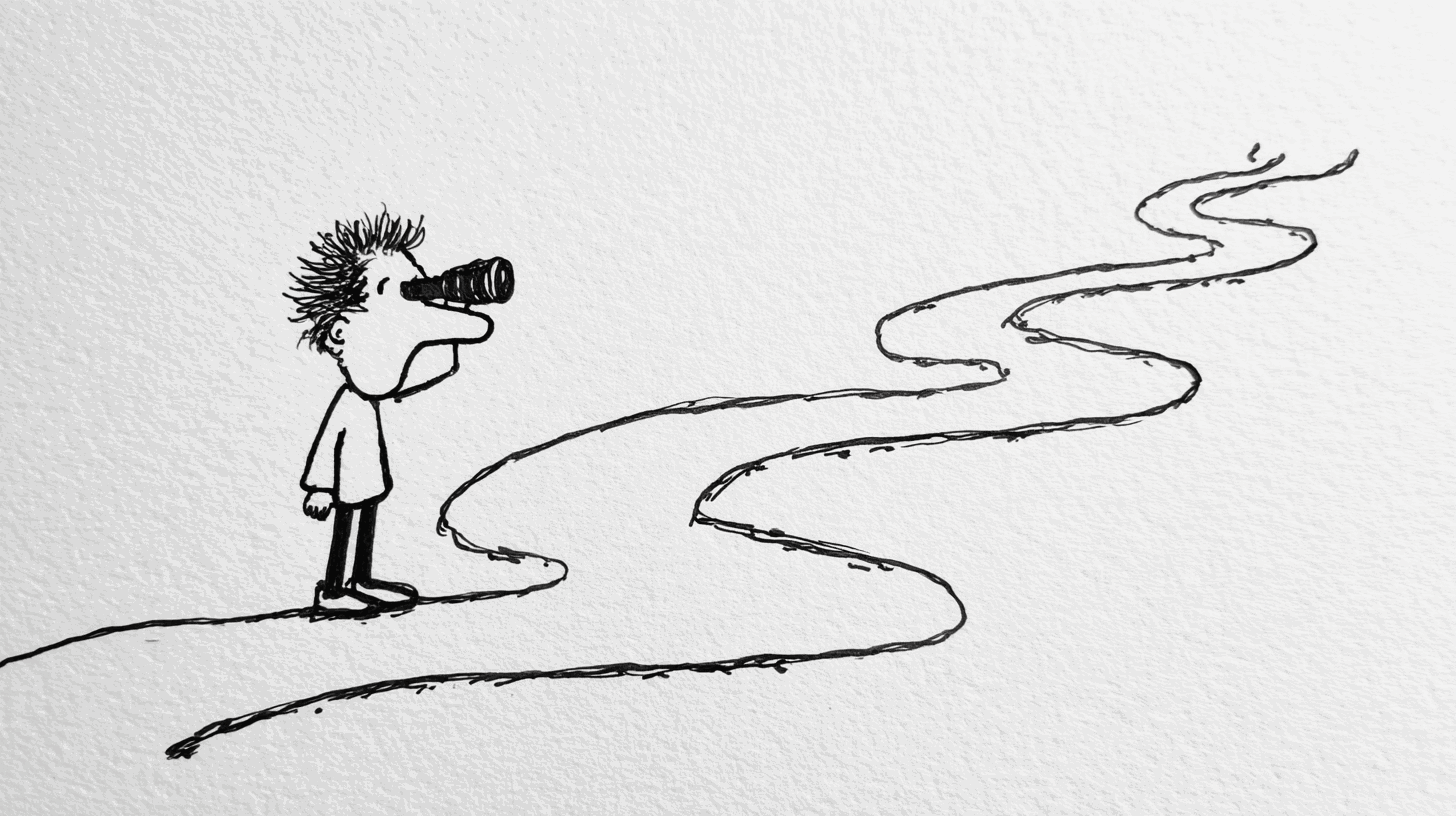
The quickest way to start a fight in a product organisation is to put a date on a slide. I have drawn the same roadmap three ways in one week. Once for the team, once for the board, once for a customer who wanted a month.
The work never changed. The document did, and each version started a different argument. The board wanted certainty, the customer wanted a month, and the team wanted to be left alone until Thursday.
One artefact, three incompatible jobs.
I wrote about this in March and I got it wrong. That piece had the roadmap molting through three lives: the Gantt chart, then outcomes, then principles. Tidy, and the archive does not support it.
What the archive shows is that the earliest writers had already abandoned the thing the later ones claimed to kill.
"While true Product adherents know that a Roadmap isn't the ideal way to communicate the value of product development, in the real world it's one of the best communication tools we've got, and often the only one senior stakeholders are interested in." Emma Gordon, writing in Product Coalition
The Fixed Roadmap Was Already Unfashionable in 2016
Product Coalition is twelve years old, which means the archive can tell me what people believed at the time rather than what they remember believing. I went looking for the era of the dated delivery plan. It is not there.
Hannah Chaplin wrote about roadmaps in the publication in October 2016. "Never assume that your product roadmap is a fixed document. If you try to set things in stone, you can't react to new information that has become available." She was writing about a growing software business, treating the roadmap as a communication problem rather than a control mechanism.
That is the modern position, published before most of the frameworks that claim to have found it. Chaplin planned broad themes a quarter or two ahead and left the detail to the near term.
Swapna M published two months later on building a simple roadmap. "Note that timelines are not involved here and should not be. These priorities might change and various factors might affect the themes at the last minute." She allowed rough timing only where the risks were already understood, and avoided concrete deadlines in a startup on the grounds that the variables arrive without warning.
Two authors, three months apart, both refusing to commit to dates. Whatever the profession spent the following decade killing, it was not this.
What I take from that is less flattering than a story about progress. The good practice was written down early, read widely, and then ignored by the people who had to survive a quarterly business review. Chaplin and Swapna were describing what they wanted. The dated chart on the wall was what their stakeholders would accept.
The Fight Was About a Definition
By 2018 the backlash had a name and a great many conference slides. What it attacked was narrower than the slogans suggested.
Kyle Evans put it plainly in November 2018. "A roadmap is not a project plan. Far too often a roadmap gets confused for a project plan. A roadmap isn't meant to be the detailed execution of specific projects." He had just defined the roadmap as a strategic document for vision, value and alignment.
Read that as a defence. Evans wanted the artefact kept and the contract removed from it.
The harder problem arrived with Nacho Bassino in February 2020. "I do like the idea that things further away are more uncertain and under 'normal' circumstances that should be true. But developing products is erratic, and new insights or market conditions can drastically change your plans."
His answer was to label each item with its stage, so that problem discovery, solution discovery and delivery sit visibly on the page. Distance stops standing in for doubt. An item three months out can be well understood, and an item starting Monday can be a guess.
In twenty years no stakeholder has ever told me they read the far end of a roadmap as a guess. They read it as a quieter promise, and the disagreement surfaces two quarters later as a broken commitment.
Josh Ben-David went after the same problem from the other side three months on, borrowing from cartography. "Too many details can make communication difficult. But how much abstraction is necessary, and can there be too much? Too little information is also a problem." A map earns its usefulness by leaving things out. The skill is choosing which things, for which reader, and that judgement has never been handed over to a template.
Now the Question Is Which One, and Whether
The recent archive stopped arguing about the word. Ant Murphy laid out seven formats in March 2022 and let the reader pick. "By removing specific dates from your roadmap you can avoid many of the pitfalls in the timeline roadmap whilst still providing clarity on product direction."
Murphy is fair about why the timeline version refuses to die. People want to know when something will be finished, and a timeline looks like an answer to that.
John Utz went further in July 2023 and asked whether some companies need one at all. "When you are early on, your goal is to learn not to document. Your goal is to be nimble. To allow space to pivot." He is talking about concept, seed and Series A stage companies, and he replaces the roadmap with a North Star, OKRs and a release brief rather than with nothing.
Gavrilo Bozovic added the inverse in August 2024, which he calls the anti-roadmap. "Not having a ready answer to the question of what you will not be building means that, conceptually, you want to do everything."
That question has settled more roadmap disputes for me than any format debate. Ask a leadership team which competitor feature they are choosing to skip, then watch the room decide whether it has a strategy.
Ten years of argument produced something narrower than a revolution. The roadmap kept the job of alignment and lost its claim to be a schedule.
Notice what survives across all three eras. Every one of these writers wants the same four things from the document, which are direction, trade-offs, a shared picture and a conversation. The disagreements are about how much certainty to imply while doing it. That is a question about your stakeholders, and no amount of reformatting answers it for you.
What I'm Hearing on the Podcast
Dave West is the CEO and Product Owner of Scrum.org, and he has been researching what AI is doing to product organisations. I asked him whether it helps product people hold the strategic and the tactical at once.
"I'm seeing very, very, very sophisticated presentations coming out of product professionals now, but not necessarily better decisions being made by those product professionals."
Then he described where the week goes.
"Oh my God, we've got to plan the next release, the next roadmap. We've got to present it to the board or to the execs or to the stakeholders, et cetera."
A roadmap built to be presented drifts back towards dates every time, because dates are what the audience turned up for. No choice of format survives an artefact whose real purpose is a monthly performance.
Dave's warning is that AI has raised the volume rather than the quality. Better slides, produced faster, defending the same decisions.
So What Does This Mean for You?
Stop asking whether roadmaps are dead. Ask what yours is for, who reads it, and which promise they believe they are being handed.
Then split the two jobs it is quietly doing. Direction and trade-off belong on the roadmap. Delivery commitment belongs somewhere else, with a date, an owner and a change process attached to it.
The archive's lesson is unglamorous. Nothing killed the roadmap and nothing needed to. The fix keeps arriving in the same shape, which is to stop asking one document to promise dates, prescribe solutions and satisfy every audience at once.
So look at the roadmap on your wall this week. Which of those jobs is it failing at, and who would object if you took that job away from it?
Got a product story worth telling? Whether you're an exceptional talent shaping the future of product, or you've got a career journey others can learn from, I want to hear from you. Apply to be a guest on the Product Coalition podcast.
👋 Jay
Product Coalition is a reader-supported publication. Paid subscribers get every issue on the day it lands.