


I remember exactly where I was standing when I got the call.
I had just graduated from university in London. Design degree. A portfolio I was proud of. I’d interviewed at a design agency I’d been obsessing over for months. The kind of place with exposed brick and people who used ‘kerning’ as a verb. The creative director had spent forty-five minutes going through my work. He loved it, laughed at my jokes, and shook my hand, saying he’d be in touch.
He was.
“Jay, I have to be honest with you. Your work is great. Your attitude is great. But we can’t employ people who talk like you.”
People who talk like you.
I’m from East London. Cockney. Not the charming Guy Ritchie kind. The actual kind, where “th” becomes “f” and sentences end before they technically should. The kind that, apparently, disqualifies you from working at a place where your job is to design things with your hands.
I didn’t argue. I didn’t feel angry, not at first. I felt something worse. I felt like he was probably right. That’s what rejection based on how you sound does. It doesn’t just close a door. It makes you believe the door was never meant for you.
The Hidden Filter
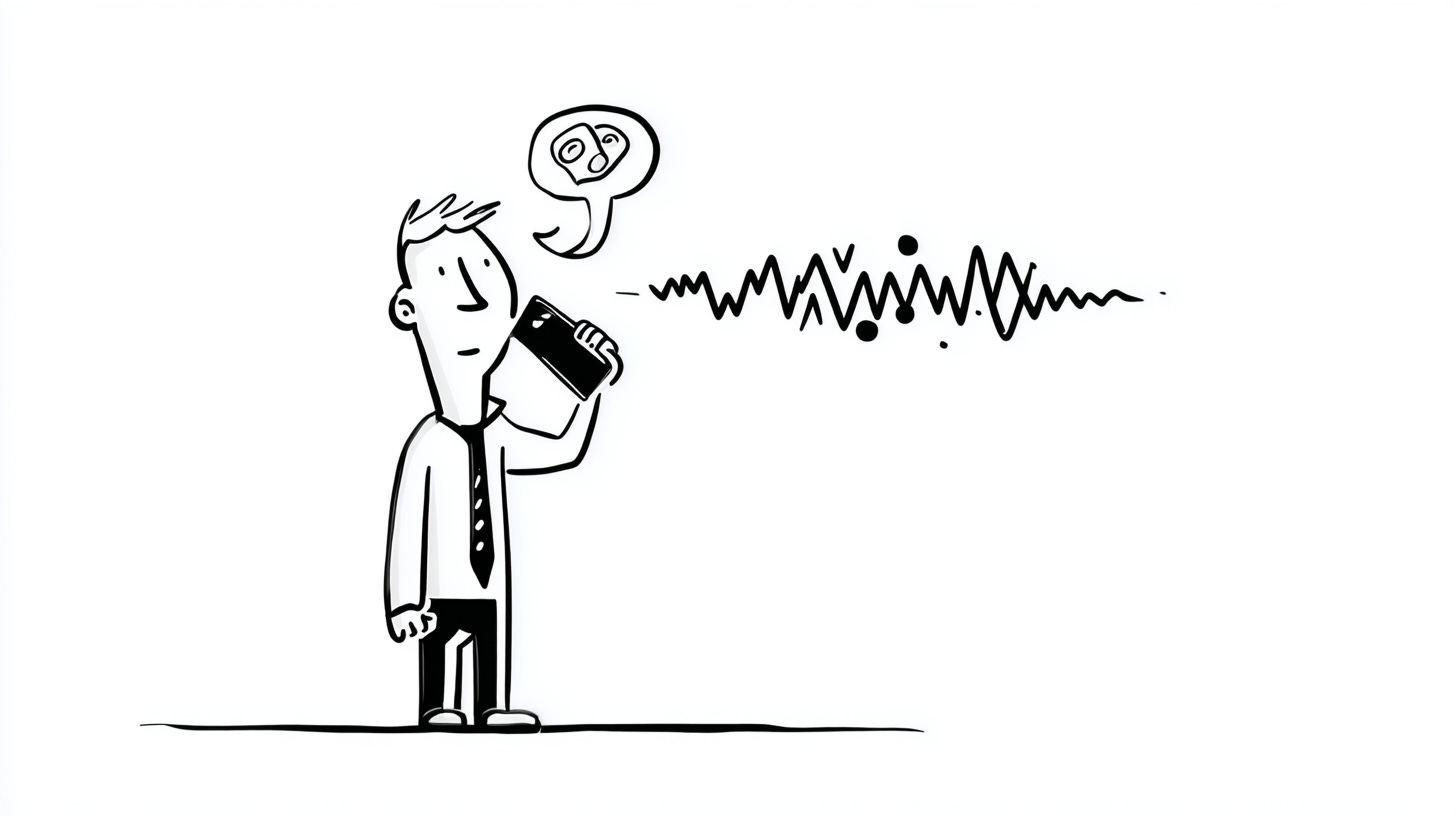
Something nobody tells you about professional life is that there’s a filter sitting underneath every other filter. It’s not on any job description. No recruiter will mention it. It’s there in every meeting room, every pitch, every interview, every promotion committee.
It’s how you sound.
Not what you say. How you say it. Your accent, your cadence, your filler words, whether you uptalk or downspeak, whether your voice carries the invisible markers of a particular postcode or tax bracket.
I remember reading Daniel Kahneman’s Thinking, Fast and Slow and it felt like someone was explaining my own life back to me. He and Tversky showed that humans make snap judgments, what he called System 1 thinking, based on surface signals, then rationalize them after the fact. That creative director didn’t spend forty-five minutes evaluating my portfolio and then make a reasoned assessment. He made a gut decision in the first thirty seconds of hearing me speak. Everything after was confirmation bias in a nice chair.
Any product team that’s studied cognitive biases would recognize the pattern. We just usually apply those insights to button colors. Not to someone’s career. I sometimes wonder if that’s the biggest blind spot in all of product management.
I spent the next twenty years building a career despite that phone call. I led product teams, founded companies, and grew Product Coalition to over a million readers. I sat on the Harvard Business Review Advisory Council. I built Find Your Grind into a $20M EdTech company.
At every single stage, I watched the same pattern repeat. Not just for me. For everyone.
The engineer who has brilliant ideas but gets talked over because she pauses too long between thoughts. The sales leader who loses deals not because his product is worse but because his delivery doesn’t carry what someone like Cialdini would call ‘authority signals’. These are the vocal patterns and confidence markers that make listeners trust the speaker before they’ve processed the content. The first-generation professional who has all the skills but none of the communication patterns that come from growing up around boardroom tables.
Communication coaching exists. It’s just not for them. It’s for Fortune 500 CEOs who pay $500 to $1,000 an hour. Everyone else gets a line in their performance review that says “needs to work on executive presence,” with precisely zero guidance on what that means or how to do it.
The Realization That Broke It Open
Sometime in early 2025, I was watching the AI space consume everything. Writing emails. Polishing documents. Drafting presentations. Generating images. Building code. Every piece of professional output was getting an AI layer.
Except one.
Your voice. The way you speak, persuade, inspire, connect was completely untouched. No infrastructure. No tools. Nothing.
Then I realized something I haven’t been able to un-think since: your voice is your last IP.
In a world where AI can write anything, design anything, code anything, the one thing that’s still authentically, irreducibly you is how you communicate when you open your mouth. It’s about autonomy, that fundamental human need to express your authentic self. Your presence in a room. Your ability to land a point, hold a silence, turn a hostile question into a moment of connection. That’s not something you outsource to a language model.
Yet there’s nothing helping people develop it at scale.

Building the Thing
I started building ExecReps in the spring of 2025. The concept was deceptively simple. AI-powered practice for high-stakes conversations. You speak. It listens. It gives you feedback on pace, clarity, filler words, confidence, structure. An Executive Performance Score to track improvement over time.
Not “speak like a TED Talk.” Not “sound more corporate.”
Not “lose your accent.”
That last part matters to me more than any feature we’ve ever shipped.
If you’ve worked in product, you know BJ Fogg’s model. Behavior happens when Motivation, Ability, and a Prompt converge. My entire v0.1 was designed around one question from that framework: what’s the simplest possible action at the moment someone is motivated to improve?
Press record. Speak for three minutes. Get feedback.
No onboarding carousel with seven screens. Just a microphone, an AI, and the lowest possible Ability threshold Fogg would accept.
On July 7th, 2025, I shipped v0.1. Google OAuth. Stripe. Voice recording, transcription, GPT–4 assessment, admin dashboard, support chat. It was all duct tape and ambition.

That first version could do exactly one thing well: listen to you speak and tell you what you could do better. No archetypes. No voice performance scoring. No team analytics. Anyone who’s used the Kano Model would recognize what we shipped. The must-have quality, nothing more. The basic expectation that has to work before delighters matter.
It was enough.
It was enough because it proved the one thing I needed to prove. That people would open a browser, press record, speak into the void, and care about what came back. It was a test of Nir Eyal’s Hook Model. I needed to know if the basic loop would close. Would an external trigger (an email invite) lead to an action (recording a workout), produce a variable reward (personalized feedback that surprised them), and create enough investment (seeing their score, wanting to improve it) that they’d come back without being asked?
That first version was a test of whether the hook existed at all.
The Product Lesson: Founder-Market Fit Is Not a Buzzword
I want to talk to the product managers reading this, because this is the part that took me fifteen years to understand.
We talk a lot about product-market fit. Important questions. There’s something that comes before all of it, though. The thing that determines whether a product has a soul or just a roadmap.
Founder-market fit.
Not “I spotted a market opportunity.” Not “I read a McKinsey report that said the executive coaching market is worth $15 billion.” I mean: has this problem left a mark on you?
Daniel Pink’s book Drive breaks this down perfectly. Extrinsic motivation, like money or market opportunity, fades the moment things get hard. Intrinsic motivation is built on Autonomy, Mastery, and Purpose. The founders who survive aren’t optimizing for TAM. They’re driven by Purpose, a problem they can’t stop thinking about because it happened to them.
That phone call in London wasn’t market research. It was a scar. Scars make better products than spreadsheets.
The first reason this matters is survival. Every product hits a trough where nothing is working. Users aren’t growing. The feature you shipped didn’t move the needle. Pink’s research is unambiguous. Purpose-driven motivation outlasts reward-driven motivation under sustained difficulty. If your motivation is “the market opportunity is large,” you will quit during the trough. If your motivation is “I got a phone call that told me I wasn’t good enough because of how I sound, and I know millions of others got the same call,” you will not quit.
It also calibrates your intuition. When you are the user, you make a thousand micro-decisions correctly without needing data. Kahneman’s work on expert intuition shows it develops in environments with clear feedback loops and repeated practice. This is exactly what founders get when building for their own problem. You know which feedback to give first because you know what would have helped you.
Finally, your story becomes your moat. In a market that’s about to get crowded, and the AI communication space will get crowded, the company with the founder who lived the problem will always sound different from the company that identified an opportunity. Users can tell.
When I tell people what ExecReps does, I don’t start with features. I start with a phone call from a creative director who liked my work but not my voice. Every single time, something shifts in the conversation. They’ve had their version of that call too.
The Uncomfortable Part
I want to be honest about something. This is a building-in-public series, and I’d rather be uncomfortably honest than comfortably polished.
When I shipped v0.1, I wasn’t sure it would work. Not the product. The idea. Previous voice coaching products had failed because they misjudged the Ability variable in Fogg’s equation. They asked users to do too much. Record a full presentation. Complete a 30-minute module. Invite colleagues to listen. The Motivation was there. The Prompt was there. Yet the Ability gap killed them.
My bet was that a three-minute solo workout with instant AI feedback was below the threshold where behavior happens. Not “I should do this” but “this is easy enough that I just did it.”
I didn’t know it would be different. I just knew I had to try. I’m still not sure we have the balance exactly right. I wonder whether we’re asking for too much, or even too little. We’re constantly tuning it.
There’s a version of my career where I keep running Product Coalition, keep advising startups, keep writing articles about product management frameworks. It’s a good career. Comfortable. Respected.
But there’s that phone call.
Every time I hear about a talented person who can’t get past the invisible communication filter, who gets the performance review that says “needs more executive presence” with no tools to develop it, I hear that creative director’s voice again. We can’t employ people who talk like you.
Fifteen years of building products taught me that the best time to start is before you’re ready. So on July 7th, 2025, I pressed deploy on something that was emphatically not ready. A foundation. A starting line. Voice recording, transcription, AI feedback, and a deeply personal bet that this problem was worth solving at scale.
What Comes Next
So this is the first post in a series. I’m not sure what the cadence will be, or even what the second post will cover. Maybe the tech stack. Maybe our first ten customers. The point is to do it in the open. I’ve spent years writing about how other people build products at Product Coalition. It feels right to turn the lens on myself.
I wanted to start here, at the very beginning, because the origin matters. It’s the thing I come back to.
It’s my simple filter for every hard decision. Does this feature serve the person who got that phone call? Does it make executive-level communication development accessible to someone who can’t afford $1,000 an hour? Does it help someone’s talent get heard rather than filtered?
If yes, we build it. If no, we don’t.
Twenty years between a phone call and a deploy button. Let’s see what happens next.